How do you handle a 9 year old boy who defecates in his pants
during the school day (each day) with no medical cause
identified?
To do justice to this question I would need much more
information. Since I don't know more, Icanonly make some guesses.
Sometimes soiling pants is an indication of sexual abuse.
Sometimes achildwho soils is passively aggressively saying,
"You can't control my bowel movements." if a parent
isbeing too controlling. Sometimes children start soiling their
pants when a new child is born intothefamily. They have adopted
the belief that the baby is loved more, and mistakenly believe
actinglike ababy might help them receive more love. Sometimes
children feel neglected. This hurts. Soilingisway of hurting back
or of getting some attention. Even negative attention is better
than none.
As you can see, I can't answer adequately without knowing what
else is going on in this child'slife. Ido know that a misbehaving
child is a discouraged child. This child needs encouragement --
notpunishment. Even though it will make this answer very long,
I'm going to include a piece I justfinished for our soon to be
published book, Positive Discipline in the Classroom A-Z.
You may be able to see how an understanding of the Four Mistaken Goals
of Misbehavior could help with your concern:
HATS TO BREAK THE CODE OF THE FOUR MISTAKEN
GOALS OFMISBEHAVIOR
DISCUSSION
There is a belief behind every behavior. Too of ten we deal only with the behavior, which
is futilewhen we don't also try to understand the motivating belief. Rudolf
Dreikurs taught that "a misbehaving child is a
discouraged child." A misbehaving child is discouraged
because she does not believe she belongs. She
does not believe she is significant. Out of this discouragement, shechooses
amistaken goal (behavior) in a misguided attempt
to gain belonging and significance. The goal ismistaken because
it is based on a mistaken belief, and the behavior usually
invites from other the opposite of what she is trying
to achieve. She wants belonging and significance, yet misbehavior
usually invites adults and other children to push her
away instead of giving her what she wants --to bepulled in.
Dreikurs identified the Four Mistaken
Goals of Behavioras:
- UNDUE ATTENTION
- POWER
- REVENGE
- ASSUMED DISABILITY or GIVING UP
There are three clues to understanding the child's goal,
- your feelings,
- your reactive actions, and
- the child's response to your reactive actions.
Once we understand the goal there are ways to encourage the
child. Punishment is not effectivebecause it intensifies the
discouragement and thus invites continued misbehavior.
MESSAGE HATS TO BREAK THE CODE
In our Positive Discipline Workshops we use "message
hats" to help parents and teachersrememberthat there is a
coded message behind misbehavior. (The message behind all
misbehavior is, "I amachild, and I just want to
belong.")
ATTENTION
The hat that represents undue attention is a large straw hat
decorated with flowers andbellsand a large sign that says,
"Notice Me. Involve Me." When you respond to this
message you willfindmany other ways to encourage the child who
seeks undue attention.
The discouraging belief that
motivates a child seeking undue attention is, "I belong
only if you pay constant attention to me." Everyone
wants attention, but there is difference between wantingattention
and needing attention to prove your worth. There
is also a difference between attention that is useful
and constructive and attention that is useless and destructive.
When adults react to the behavior instead of understanding the motivating belief, they feel
annoyed, irritated, worried, or guilty. (This is
the first clue that the child's mistaken goal is attention.)They tend
to react by reminding, coaxing, or doing things for
children that they could do for themselves. (This is the
second clue.) The usual child's response will be to stop seeking
undue attention temporarily, but will soon start again
until encouraged. (This is the third clue.)
SUGGESTIONS:
- You can be encouraging to
children when you understand the mistaken goal (based
on amistaken belief) and when you respond to the
message on their make believe hats.
- One way to encourage children who seek
undue attention is simply to help them find attentionin
ways that are constructive. Give them jobs,
let them teach lessons, invite them to tutor
others.
- Allow time for children to share their
feelings, thoughts, and ideas. It is also effective to
ignore the misbehavior while flashing a
loving wink or putting your hand on the child's
shoulder.(This paying loving attention to the child
while ignoring the misbehavior for the moment. Help
the child think of other ways to gain constructive
attention later.)
- Kindness with firmness is very effective. The kindness says, "I
care about you and will give you respectful attention."
The firmness says, "I don't buy into
your belief that you need undue attention."
POWER
The "message hat" for power is a hard hat with a
large sign that says, "Let me help. Givemechoices."
When you respond to this message you will find many other ways to
encourage thechildwho uses negative power.
Everyone wants power, but there is difference between power that is
useful and constructive and power that is useless and
destructive.
When adults react to the behavior of the power hungry child instead of
understanding the motivating belief, they feel angry,
challenged, threatened, or defeated. (Clue No. 1.) They tend to
react byfighting, giving in, wanting to be right, or trying to
control the child into "proper" behavior. (ClueNo.2.)
The child's response is to intensify defiant behavior or become
passive aggressive. (Clue No.3.)
SUGGESTIONS
- One way to encourage children
who seek power is ask for their help.
- It is very effective to admit
you have been trying to control them, declare you
don't want todothat anymore -- and that to stop this
pattern you need their help.
- Give them choices and invite
them to join the class in setting up rules, limits,
and routines.
- Encourage them to put concerns
on the class meeting agenda or to take some positive
timeoutto allow for a cooling off period.
- Many of the suggestions made
above for undue attention seeking children are
effective tohelppower hungry children us their power
constructively. They can tutor other children,
teachlessons, and undertake meaningful classroom jobs.
- Kindness with firmness is very
effective. The kindness says, "I care about you
andappreciaterespectful power." The firmness says, "I
won't let you use power to dominate others."
(Manyteachers have to learn this for themselves before
they can teach it to children.)
- Class meetings can help everyone use power constructively
by through the process of findingnon-punitive solutions.
REVENGE
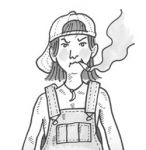
The "message hat" for revenge is a baseball hat turned backwards
with a large sign thatsays,"Help me. I'm hurting." When
you respond to this message you will find many other
ways to help the child who seeks revenge.
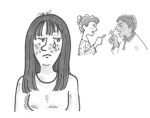
The discouraging belief that
motivates a child seeking revenge is, "I don't belong and that hurts, but
at least I can get even." It seems to be a gut
reaction in human beings to want to hurt back when we feel hurt.
The tricky part here is that sometimes the child feels hurt
by something that was done unintentional. For example,
children often feel hurt (at a subconscious level) when
a newbaby is born. We know children who have felt
hurt because a teacher took time off to go to a workshop. Sometimes
reasons are more obvious. Foster children usually feel
hurt because they feel abandoned by their parents.
They often take revenge on anyone who comes in their path, such
as fosterparents orteachers who didn't do anything to hurt them.
When adults react to the hurtful behavior instead of
understanding the motivating belief,theyfeel hurt,
disappointed, disbelieving, or disgusted.
(Clue No.
1.)
They tend to react by retaliating through punishment,
or trying to make the child feel guilty through a "How
could you do such athing?" lecture. (Clue No. 2)
The child's response is to escalate the war by
hurting others,property, oryou even more until he or she
feels encouraged.
(Clue No. 3.)
SUGGESTIONS
- One way to encourage children
who are into revenge is to deal with the hurt
feelings.Sometimes you have to guess what they might
be feeling hurt about. You might say, "I feelhurt by
what happened, so I'm guessing you must feel hurt.
Would you be willing to tell mewhat hurt you?" It is
important not to dwell on your hurt except as a clue
that the child feelshurt. Use reflective listening,
make amends, show you care. Share times when you have
felthurt by others.
- Kindness with firmness is very
effective. The kindness says, "I don't want to hurt
you or forothers to hurt you." The firmness says, "I
don't want to let you hurt me or others either."
- This child will benefit (as do all children) from hearing compliments
during class meetings. (Be sure that a child who
is engaging in hurtful behavior is assigned a "secret
pal" who will look for positive things
about this child to use as compliments.)
ASSUMED DISABILITY or GIVING UP
The "message hat" for assumed disability (giving up) is a
ski hat pulled down over the eyeswith a large sign that says, "Have
faith in me. Don't give up on me." When you respond to
this message you will find many other ways to help the child
who assumes he or she is inadequate and wants to give up.
The discouraging belief
that motivates a child who wants to give
up is, "I can't belong. I give up. Leave me
alone." Sometimes the undue attention seeking children act like they are
inadequate, but the difference is that they don't want you
to leave them alone.
When adults react to the behavior instead of
understanding the motivating belief, they feel despair,
hopeless, helpless andinadequate.(Clue No. 1.)
They tend to react by giving up just like the child,
or over helping. (Clue No. 2.)
The child's response will be to retreat further, be
passive, and avoid responding. (Clue No. 3.)
SUGGESTIONS
- One way to encourage children who
want to give up is to take small steps to re-teach.
Don't give up. Be persistent. (Sometimes this
child will do something just to get you to leave
heralone. In the process, however, she experiences
some success and feels encouraged.)
- Stop all criticism, focus on
assets, and avoid pity or discouragement.
- Invite the child to choose (or
assign) a peer tutor.
- Build on his or her interests.
Incorporate them into lesson plans as motivators.
- Kindness with firmness is very effective. The kindness
says, "I understand yourdiscouragement." The
firmness says, "I have faith in you and won't give
up on you."
INSPIRATIONAL STORY
Workshop participants were asked to role play, first the
reactive feelings and actions ofadultswhen faced with a
misbehavior, and then effective actions adults can take when they
understandthegoal and respond to the message on the hat. During
the first part of a role play, a parentresponded toa child
interrupting on the phone by nagging and scolding. During the
second part of the roleplay, theadult responded to the message on
that hat, "Notice Me. Involve Me." The parent gave the
childawrist watch and told her to watch the second hand. She
said, "When the second hand goesaroundtwice, let me know and
I will get off the phone." Instead of pestering her parent,
the little girldiligently watched the second hand. Her parent
hung up the phone before the second hand wentaround twice. The
person role playing the child said, "You had more time. You
hung up toosoon."
Jane Nelsen